 Lydiony Garden
16 July 2026
Tomato Seedlings vs Seeds
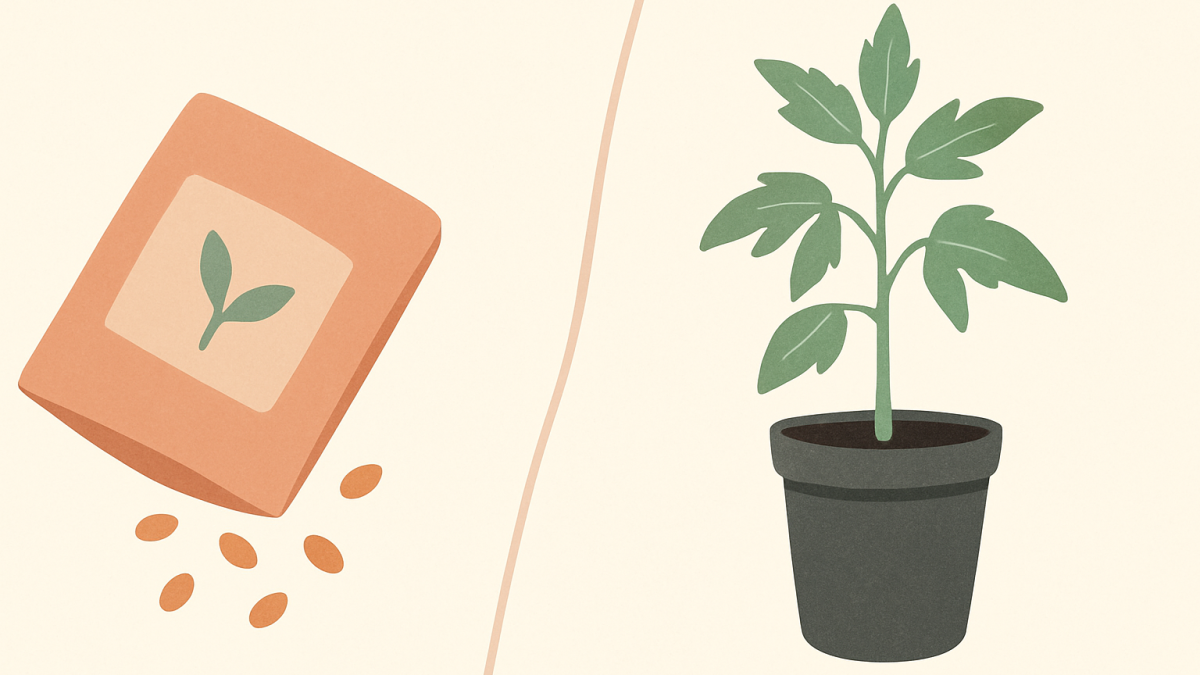
Should you start your tomatoes from seed, or plant tomato seedlings instead? It's one of the first decisions every Melbourne gardener faces each spring, and the honest answer is: it depends on what you value most — variety choice, cost, timing, or simply getting a reliable harvest with the least effort. This guide breaks down the real trade-offs of tomato seedlings vs seeds so you can choose the right approach for your garden this season.
The Core Trade-Off
Growing from seed and buying seedlings solve the same problem — getting a tomato plant into your garden — but they ask very different things of you along the way. Seed asks for time, indoor space, and a tolerance for some failure. Seedlings ask for a bit more up-front cost in exchange for skipping straight to a plant that's already proven it can grow.
Starting Tomatoes from Seed
Advantages
- Variety choice: Seed catalogues offer hundreds of tomato varieties, far more than you'll ever find as seedlings in a shop. If you're chasing a specific rare heirloom, seed is often the only way to get it.
- Lower cost per plant: A packet of seed produces many more plants than the equivalent spend on seedlings, which matters if you're planting a large patch.
- Satisfaction: For a lot of gardeners, growing a plant from seed all the way to harvest is part of the point.
Disadvantages
- Time commitment: Tomato seed needs 6-8 weeks of indoor growing before it's ready to plant outside — that's six to eight weeks of daily attention to light, water, and temperature, starting well before Melbourne's outdoor planting window even opens.
- Equipment: Reliable germination and strong, non-leggy seedlings generally need a heat mat and grow lights, or at minimum a very bright, warm windowsill — a plain indoor windowsill in a Melbourne winter often isn't warm or bright enough on its own.
- Risk of loss: Damping off, inconsistent watering, insufficient light producing weak, leggy seedlings, and a cold snap right before transplanting are all common ways a home-started seed tray comes to nothing, right when it's too late in the season to start over.
- Hardening off required: Seedlings grown indoors need a gradual, week-plus transition to outdoor conditions before they can be planted out, adding yet another step — and another risk window — before they're actually in the ground.
Buying Tomato Seedlings
Advantages
- Time saved: Buying tomato seedlings skips 6-8 weeks straight to a plant that's ready — or nearly ready — to go into the garden, right at the point in the season when conditions are actually right for it.
- Already hardened off: Good quality nursery-grown seedlings have already been through the hardening-off process, meaning less risk of transplant shock compared with a seed-grown plant moved outside for the first time.
- Proven vigour: A healthy seedling has already demonstrated it can germinate and grow well — you're not gambling on a whole tray of seed with uncertain viability.
- Perfect for smaller gardens: If you only want two or three tomato plants, seedlings are far more practical than a full seed packet's worth of plants you don't have room for.
Disadvantages
- Narrower variety range: You're limited to whatever varieties a nursery is growing that season, though a good local supplier growing a wide heirloom range — like our own selection of tomato seedlings — narrows this gap considerably.
- Higher cost per plant: Seedlings cost more per plant than seed, though for most home gardens planting a modest number of plants, the total cost difference is small.
So Which Should You Choose?
A practical way to decide:
- Choose seed if: you're growing a large number of plants, chasing a specific rare variety not available as seedlings, have reliable indoor growing setup (heat mat, grow lights), and don't mind the extra weeks of work and some risk of loss.
- Choose seedlings if: you want to plant right when the season's ready, you're growing a modest number of plants, you'd rather skip the indoor growing stage entirely, or this is your first season growing tomatoes and you want the best odds of success.
Most Melbourne home gardeners — including plenty of experienced ones — land on seedlings for exactly this reason: the time and risk saved usually outweighs the lower up-front cost of seed, especially once you factor in a failed seed tray meaning no tomatoes at all that season.
A Middle Ground: Do Both
There's no rule saying you have to pick one approach exclusively. Many gardeners start a couple of hard-to-find heirloom varieties from seed for the challenge and the variety, while filling out the rest of the patch with reliable, ready-to-plant seedlings of proven performers — getting the best of both without betting the whole season on either approach.
Frequently Asked Questions
Is it cheaper to grow from seed? Per plant, yes, if you're growing enough plants to use most of a seed packet. For a typical home garden of three to six plants, the cost difference after accounting for seed-raising mix, trays, and any equipment is much smaller than it first appears.
Can I start seed now and still plant this season? It depends how late in the season it is. Tomato seed needs 6-8 weeks indoors before it's ready to plant out, so if your local planting window is close, seedlings will get you growing sooner with no loss of season.
Do seedlings transplant as well as seed-grown plants? Yes, provided they're properly hardened off before their final move to the garden — which reputable local nurseries do as a matter of course before selling them.
What if I want a variety I can't find as a seedling? This is really the main scenario where seed has a clear edge — for very unusual or rare heirloom varieties not commonly stocked, seed may be your only option, so it's worth checking what's available as seedlings first before assuming you need to grow from seed.
Ready to Plant?
If you've decided seedlings are the right call this season, browse our full range of tomato seedlings — locally grown and hardened off, ready to go straight into your Melbourne garden once the weather's right.